


Approach参道
Chapter 00 — The Hidden Gate
Where stillness reveals the unseen.
Enter Kyoto through its quiet thresholds, where ritual, craft, and memory shape the path.
Scroll to enter
01
Thresholds
Discover the hidden gates that open on to deeper paths.
02
Still Gardens
Witness the courts where silence gently unfolds.
03
Sacred Craft
Embrace the hands and heritage that shape devotion.
04
Night Rituals
Explore the rites that awaken when the day is done.
影の道
01 — The Sanmon山門
Charred cypress, worn stone, one gate left open.
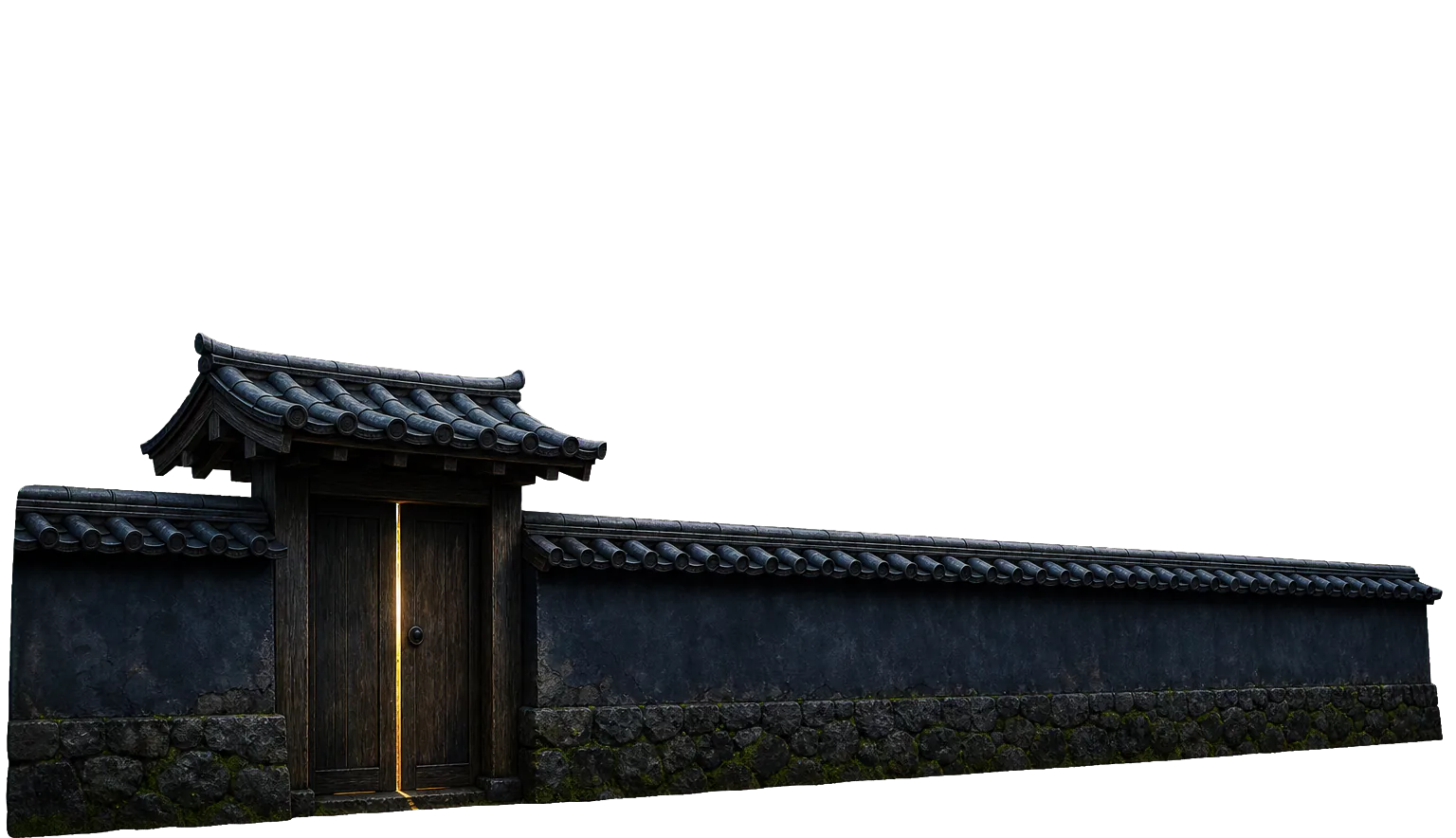
Kage begins where the city stops: a mountain gate of cedar burned black, standing in its own weather. The soot is not decoration. It is how a board is taught to survive a hundred rainy seasons, and the first thing this place asks you to understand.
Climb the worn steps and the worship hall lifts out of the mist, its paper screens lit from inside like a lantern the size of a house. Above the eaves a vermilion moon holds its place, patient, half hidden. Nothing here is in a hurry. Neither, for the next ninety minutes, are you.
Cross the threshold05Chapters
92Minutes
1611Hall raised
∞Stillness
02 — Still Gardens庭園
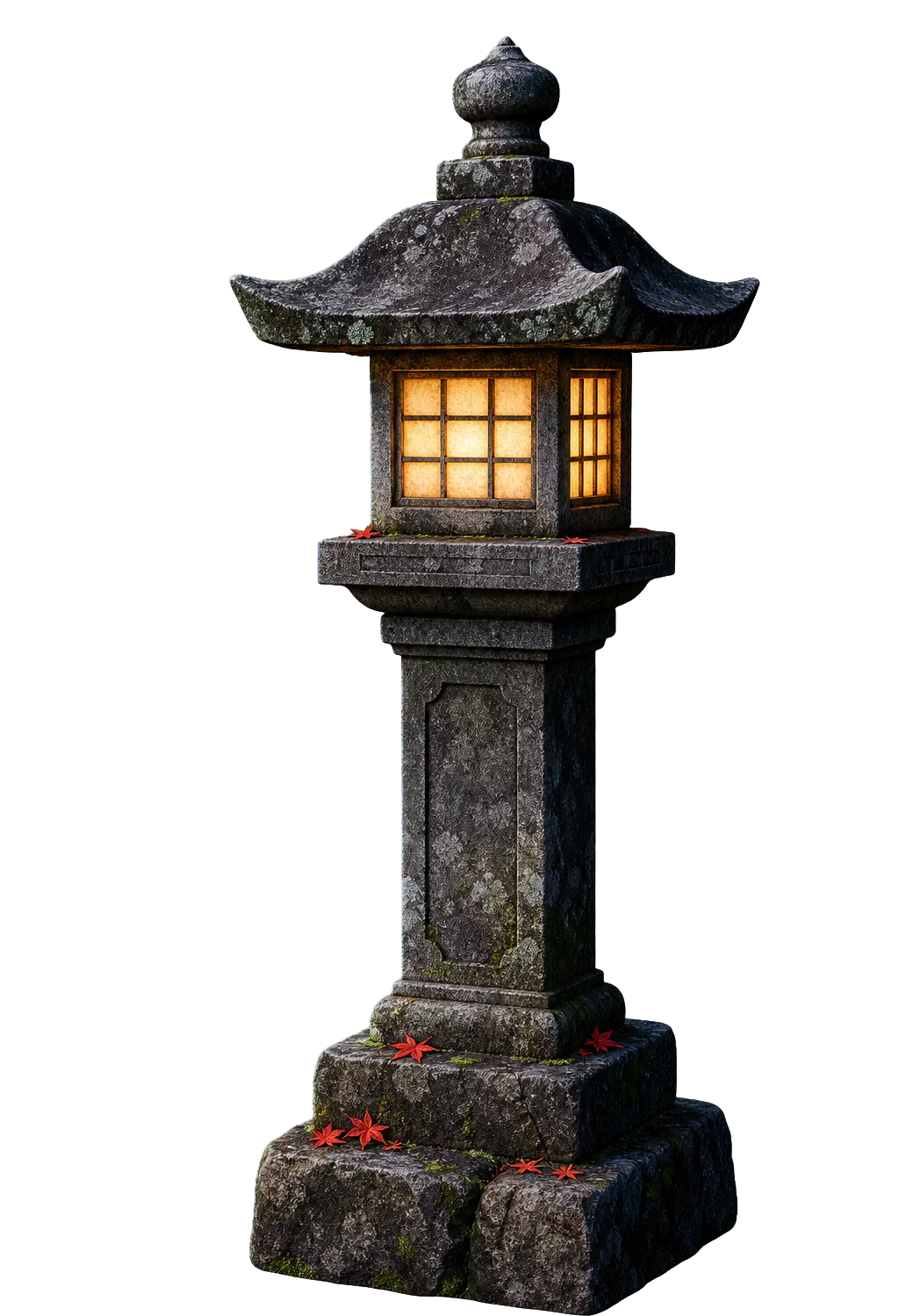
Lanterns灯籠
Moonwater月影
03 — Sacred Craft手業
Five chapters. Ninety minutes. One quiet mind.
Each chapter is a walk, not a lecture. You arrive at the gate, climb the steps, sit with the lantern, and leave with one thing worth keeping.
01
The Hidden Gate山門
Why a gate is a sentence, and what you agree to when you walk under one.
14 min
02
Borrowed Scenery借景
Shakkei: composing with a mountain you will never own.
18 min
03
Charred Cypress焼杉
Yakisugi: burning a board black so the weather will let it live.
21 min
04
Lantern Light灯籠
How a single ember decides the scale of everything around it.
17 min
05
The Vermilion Moon朱月
Why the moon burns red over the valley, and what the garden does with it.
22 min
Chapter 04 — Afterlight
Afterlight
The gate does not close behind you. Take the walk whenever the noise gets loud — it is always the same path, and never the same light.
Begin the walk